Common Defects Found During Sorting Bag Inspections
The most common defects found during sorting bag inspections include weak structural stitching, incorrect dimensional measurements, defective closure hardware, and fabric contamination. Identifying these specific manufacturing flaws early prevents severe product failures, eliminates costly retail returns, and ensures that heavy duty sorting bags meet exact industrial performance standards.
What Are the Most Common Defects in Sorting Bags?
The most common defects in sorting bags fall into structural, cosmetic, and functional categories. Because sorting bags are explicitly designed to organize and transport heavy loads for recycling systems, industrial laundries, or bulk mail operations, they endure immense daily physical stress. When overseas factories rush production schedules or substitute substandard raw materials, specific non-conformities consistently emerge on the assembly line.
Quality control specialists systematically track these anomalies to protect enterprise buyers. The most frequent issues encountered include:
-
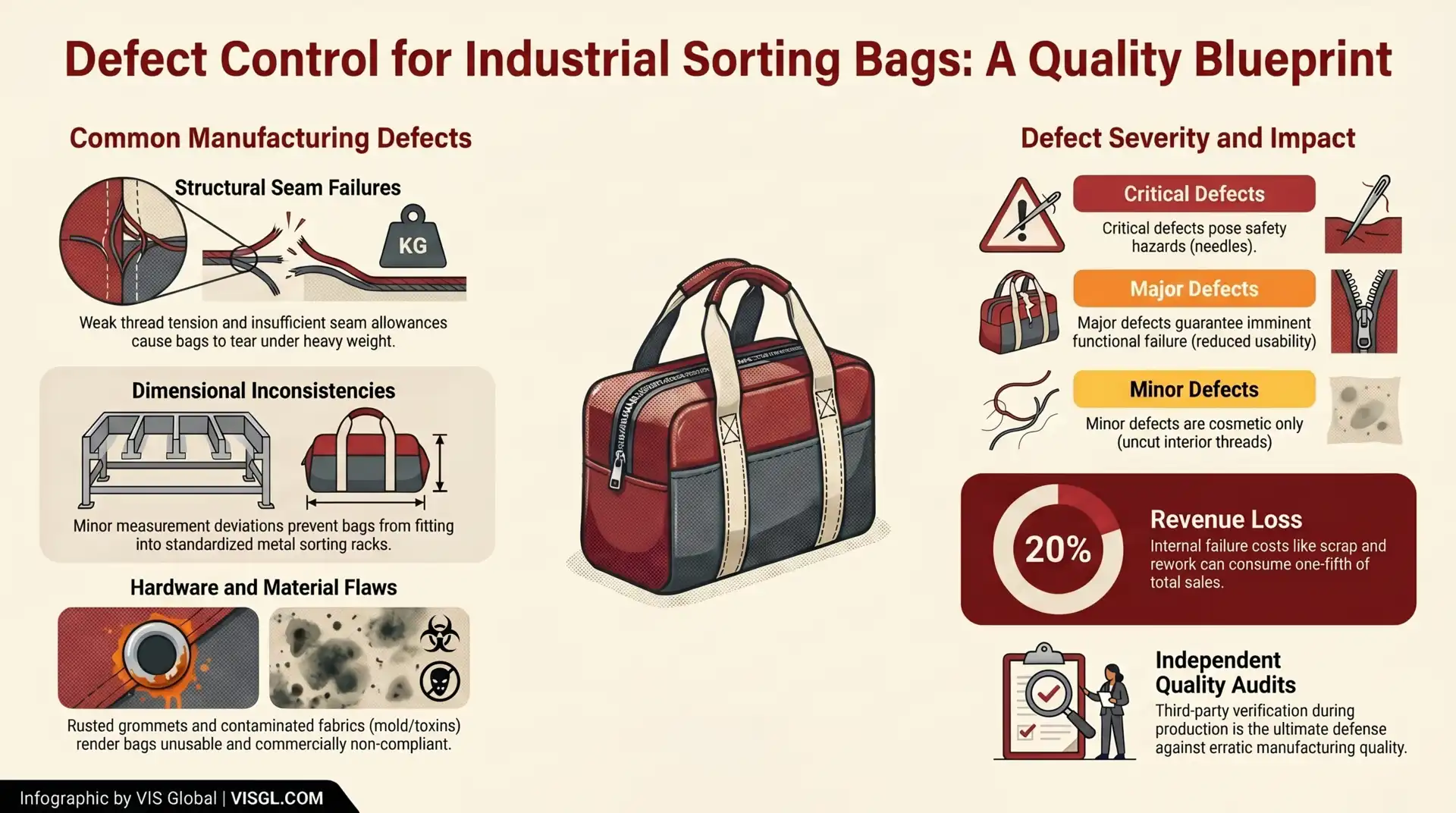
Structural Seam Breakage: Dropped stitches, weak thread tension, and insufficient seam allowances cause the bag to tear open under heavy weight.
-
Dimensional Inconsistencies: Bags cut too small or sewn with incorrect proportions fail to fit into designated metal sorting bin frames.
-
Hardware Malfunctions: Broken zippers, bent metallic grommets, and weak plastic buckles prevent the bag from closing securely.
-
Material Contamination: Chemical stains, dampness, mold, or toxic dye transfer ruin the aesthetic and safety profile of the final textile product.
Why Do Structural Seam Failures Occur in Sorting Bags?
Structural seam failures occur in sorting bags primarily due to incorrect sewing machine thread tension and the unauthorized use of low grade industrial thread. When sorting bags are loaded to their maximum capacity with dense materials like glass bottles, wet laundry, or bulk packages, the lifting handles and bottom panels absorb maximum kinetic pressure. If factory operators fail to perform reinforced cross stitching or backstitching at the critical handle joints, the connection points will unravel almost immediately during consumer or industrial use.
To combat this vulnerability, quality control inspectors perform strict static load tests and dynamic jerk tests to verify seam integrity. During a standard inspection, the sorting bag is loaded with specific weights and forcefully lifted multiple times to simulate years of harsh operational use. Identifying these hidden weak points requires aggressive physical stress testing rather than simple visual overviews.

How Are Dimensional Inconsistencies Managed in Quality Control?
Dimensional inconsistencies are managed in quality control by executing precise physical measurements against the approved golden sample and the original engineering tech pack. Sorting bags are rarely used as standalone items; they are frequently designed to hang precisely inside standardized modular racks or rolling carts. If a factory deviates from the specified pattern by even a few centimeters, the bag will simply not fit its intended structural frame.
Inspectors lay the bags completely flat on a measurement table and verify the overall length, width, gusset depth, and handle drop length. This strict dimensional auditing prevents buyers from receiving thousands of units that are structurally incompatible with their existing organizational hardware ecosystems.
How Does Fabric Contamination Affect Sorting Bag Quality?
Fabric contamination destroys the commercial viability of sorting bags by introducing permanent aesthetic flaws and severe chemical compliance risks. Offshore factories often store raw canvas, nylon, or polyester rolls in damp, poorly ventilated warehouses. This uncontrolled environment breeds toxic mold and introduces moisture damage long before the fabric is ever cut. Furthermore, incorrect dyeing processes and cheap colorants lead to heavy color bleeding when the bags are washed or exposed to outdoor rain.
Regulatory bodies actively monitor chemical compliance in imported textile products. Ensuring that fabrics are entirely free from restricted substances is critical, as highlighted by government technical guidelines on restricted substances in textiles. Sorting bags failing these rigorous chemical audits face mandatory border rejections, severe corporate fines, and permanent market exclusion.
What Impact Do Hardware Malfunctions Have on Product Durability?
Hardware malfunctions severely degrade product durability because damaged grommets, buckles, and zippers render the sorting bag completely unusable for secure transport. Heavy duty sorting bags rely entirely on reinforced metal or rigid plastic hardware to maintain their shape, hang securely on sorting racks, or close tightly to prevent contents from spilling out.
When factories attempt to cut costs by sourcing cheap zinc alloys instead of marine grade stainless steel, the hardware rusts exceptionally quickly in humid commercial environments. Inspectors verify these vital components by executing rigorous physical pull tests, zip cycling tests, and salt spray corrosion checks to ensure long term mechanical resilience.

How Are Defect Severity Levels Classified During Inspections?
Defect severity levels are classified during inspections into critical, major, and minor categories based on their direct impact on user safety and overall usability. Quality engineers utilize these standardized international classifications to determine if a production lot mathematically passes or fails the Acceptable Quality Limit thresholds.
What Steps Can Manufacturers Take to Prevent Sorting Bag Defects?
Manufacturers can prevent sorting bag defects by implementing strict incoming raw material inspections, calibrating sewing machinery daily, and deploying independent quality audits during active production runs. Waiting until the entire order is fully packaged to check for dropped stitches or weak handles guarantees an exceptionally high material scrap rate and inevitable shipment delays.
By catching errors mid cycle, factory managers can adjust their assembly lines before the defects multiply. The financial impact of ignoring these steps is severe. According to the American Society for Quality metrics on the cost of poor quality, internal failure costs such as scrap and factory rework can consume up to 20 percent of total sales revenue if left unchecked. Structured process control and independent third party verification remain the ultimate defenses against erratic manufacturing quality.
Protect your commercial reputation and eliminate expensive logistics bottlenecks by securing your textile assembly lines. Integrating a rigorous inspection protocol guarantees that your sorting bags are built to withstand the toughest environments without failing. Contact our enterprise advisory division today to integrate continuous production monitoring into your global procurement strategy with VIS Global.