AQL Standards for Sorting Bag Quality Inspections
AQL standards for sorting bag quality inspections provide a statistical sampling framework to determine batch acceptability. By measuring critical, major, and minor defects against predetermined mathematical limits, buyers ensure heavy duty industrial bags meet structural requirements without the prohibitive costs of examining every individual unit.
What Are AQL Standards in Sorting Bag Manufacturing?
AQL standards in sorting bag manufacturing represent the maximum number of defective units permitted in a random sample before an entire production lot is rejected. AQL stands for Acceptable Quality Limit. This framework provides procurement teams with a mathematically proven method to validate large commercial orders of industrial textiles.
Sorting bags handle extreme mechanical stress during recycling operations, bulk mail sorting, and commercial laundry logistics. Consequently, establishing strict rejection thresholds guarantees that these woven polymer and heavy canvas bags endure rigorous daily use. Quality engineers rely heavily on this statistical model to confidently pass or fail lots consisting of tens of thousands of units based on a scientifically calculated sample.
By setting a clear threshold, the buyer and the overseas supplier share a unified understanding of what constitutes a passing grade. This objective standard removes emotional negotiations from the factory floor and replaces them with hard data.
How Do You Calculate Sample Sizes for Industrial Bags?
You calculate sample sizes for industrial bags by cross referencing your total order quantity with an assigned General Inspection Level on standard AQL charts. This process dictates exactly how many bags the inspector must pull at random from the fully packaged production lot.
Most international buyers select General Inspection Level II for sorting bags. This level perfectly balances inspection accuracy with operational time efficiency. For example, if a buyer orders 10,000 sorting bags, the inspector consults the chart to find the specific sample letter code, which typically dictates pulling exactly 200 bags for a comprehensive physical review.
Procurement managers can adjust these levels based on their historical relationship with the manufacturer:
-
General Inspection Level I: Utilized for highly trusted suppliers with a long history of perfect compliance, requiring fewer samples to save time.
-
General Inspection Level II: The global default setting for standard industrial textile production and logistics hardware.
-
General Inspection Level III: Applied to unverified suppliers or highly complex items requiring a much larger, more rigorous sample base.
What Defect Classifications Apply to Sorting Bags?

Defect classifications for sorting bags are divided into critical, major, and minor categories depending on how the flaw affects user safety and product functionality. Setting the correct AQL limits for each category is vital for securing your logistics chain.
A highly standard configuration for sorting bags is 0.0 for critical, 2.5 for major, and 4.0 for minor defects. If the total number of anomalies found in the random sample exceeds these specific mathematical limits, the entire container shipment fails the inspection.
The table below outlines how specific manufacturing flaws in sorting bags fall into these distinct compliance categories:
Why Is Statistical Sampling Better Than 100 Percent Inspection?
Statistical sampling is better than 100 percent inspection because it drastically reduces overhead quality control costs and mitigates human error caused by visual fatigue. Checking 10,000 heavy duty sorting bags manually takes weeks and rapidly drains corporate procurement budgets.
Furthermore, human inspectors naturally experience cognitive blindness after looking at identical items for eight straight hours. Quality assurance data proves that applying ANSI/ASQ Z1.4 sampling procedures for attributes ensures a highly accurate compliance rate while keeping export logistics moving swiftly. This method maintains an objective baseline rather than relying on subjective human stamina.
By focusing intense scrutiny on a manageable sample of 200 bags, inspectors can perform rigorous dynamic load testing and precision dimensional measurements that would be physically impossible to execute on every single unit.
How Do You Handle a Failed AQL Inspection?
You handle a failed AQL inspection by rejecting the entire lot and forcing the manufacturer to execute a full internal sorting process at their own expense. Once the factory manually removes all defective units and replaces them, the buyer must schedule a secondary inspection to verify the newly assembled batch.
Accepting a failed lot sets a dangerous commercial precedent. It signals to the offshore manufacturer that your contractual quality limits are highly flexible. Enforcing the AQL failure forces the supplier to improve their internal sewing machine calibrations and raw material checks for all future orders.
Research shows that utilizing structured acceptance sampling and enforcing failures reduces post delivery defect rates by up to 35 percent over the lifecycle of a supplier relationship.

What Tools Are Used During a Sorting Bag AQL Check?
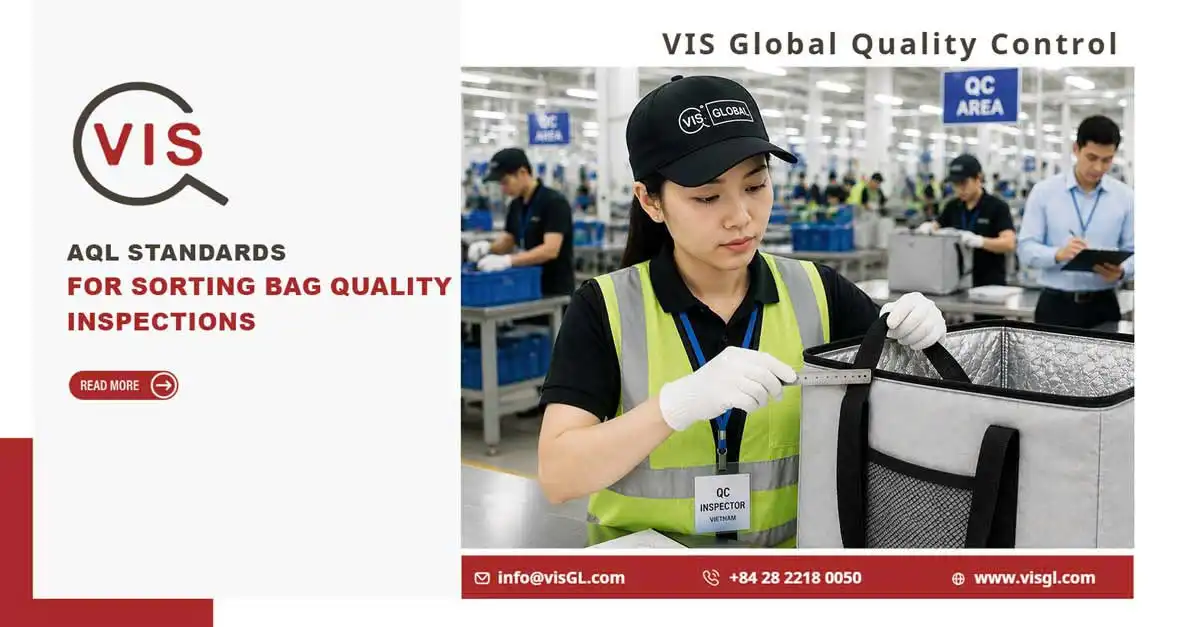
Inspectors use calibrated tensile force gauges, precise measuring tapes, and standardized color swatches during a sorting bag AQL check to ensure objective data collection. Because these products manage immense payloads, simply looking at the fabric surface is completely insufficient.
Quality engineers must measure the exact gusset depth to ensure the bag fits into standardized commercial sorting racks. They utilize tension gauges to pull on the cross stitched handles, verifying that the nylon webbing does not separate from the canvas body under pressure.
Additionally, inspectors utilize barcode scanners to ensure that all shipping marks and retail labels comply perfectly with destination market customs requirements. This technical rigor ensures the AQL report reflects the true mechanical integrity of the shipment.
How Do Procurement Teams Implement AQL Effectively?
Procurement teams implement AQL effectively by embedding exact inspection levels and defect definitions directly into the initial supplier purchasing contracts. Factories must understand the specific rules of engagement before they begin cutting raw fabric.
If an importer fails to establish an Acceptable Quality Limit in writing, the supplier will naturally dictate what constitutes a passing grade on the assembly line. Supply chain data published by the International Organization for Standardization guidelines on sampling procedures highlights that utilizing strict criteria standardizes cross border trade expectations and prevents costly commercial disputes.
By defining exactly what constitutes a major seam failure versus a minor visual blemish in the purchase order, buyers remove all operational ambiguity. Protect your logistics infrastructure and secure your industrial textile investments by enforcing mathematical quality control. Build a resilient manufacturing network today by partnering with VIS Global.